A Personal AI Assistant That Remembers Your World
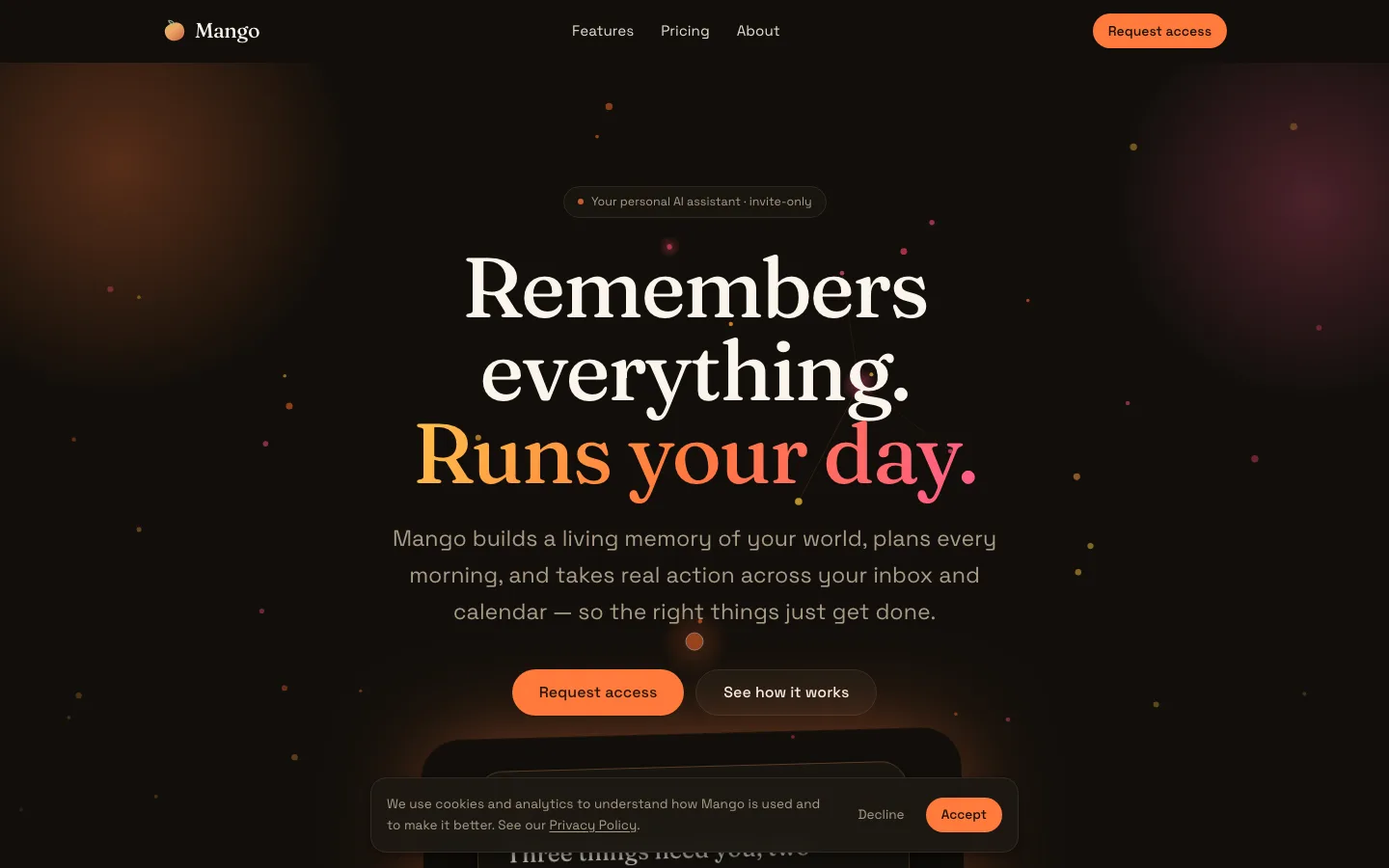
Assistants forget everything between conversations, so you end up re-explaining your own life before you can get any help with it.
The Challenge
Assistants forget everything the moment a conversation ends, so every session starts with the user re-explaining their own life before they can get any help with it. Longer context windows do not fix this, they just move the wall further out. What is missing is not capacity, it is structure: a chat log has no idea that the person you mentioned last Tuesday is the same person you are talking about now.
What We Built
Mango stores what it learns as a knowledge graph rather than a transcript, so people, projects and commitments are entities with relationships instead of text that happened to be typed near each other. Retrieval then answers questions about your world rather than searching your history. On top of that the assistant plans the day and acts in the background rather than waiting to be asked.
Decisions Worth Explaining
A graph alongside vector search, not instead of it
Vector similarity is good at finding text that reads like your question and bad at answering who reports to whom. Neo4j handles the relationships and pgvector handles the fuzzy recall, because the two questions genuinely need different machinery.
Containerised memory service on GCE, not in a function
Graph workloads want a warm process with a persistent connection pool. Running Cognee as a long-lived container avoids paying cold start and reconnection costs on every single memory lookup.
The Result
In private beta, with persistent memory backed by a graph rather than a chat log.
Under the Hood
Astro marketing site, Next.js app, and a containerised Cognee knowledge-graph service on GCE behind Firebase, with Postgres, pgvector and Neo4j for memory retrieval.
Technology Stack
Want Similar Results?
Let's discuss how we can help solve your technical challenges.